
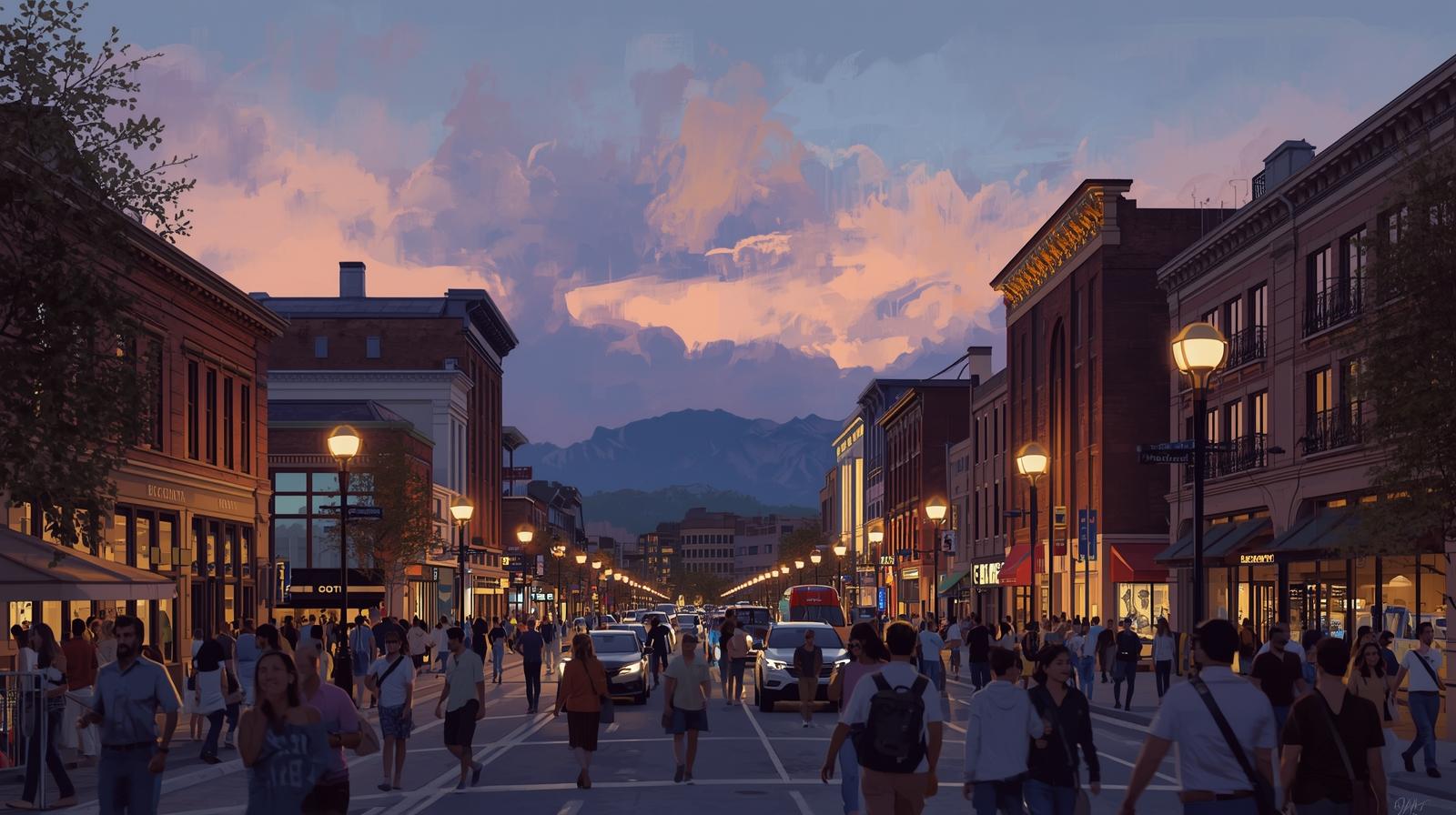
Colorado Springs has always existed slightly outside the spotlight. For a city defined by dramatic scenery, economic stability, and an enviable quality of life, it has long felt quietly self-contained, known deeply by those who live here and largely overlooked by those who don’t. That sense of being undiscovered has never been accidental. It is the result of steady, deliberate growth rather than rapid expansion, of a city shaped by long-standing institutions and natural boundaries rather than trends.
While other Western cities surged through aggressive development cycles, Colorado Springs grew at a different pace. The military presence, aerospace sector, healthcare systems, and educational institutions created a foundation that favored stability over speculation. Growth was consistent but measured, allowing neighborhoods to mature rather than reinvent themselves every decade. For many residents, that restraint became part of the city’s identity.
What is changing now is not the city’s character, but how it is perceived.
Lifestyle priorities have shifted. Buyers and residents alike are increasingly drawn to places that offer balance rather than buzz. Colorado Springs answers that call in a way few cities can. It provides access to open space, trails, and mountain views without sacrificing sophistication. It offers room to breathe without isolation, activity without congestion, and variety without sprawl. The city’s scale feels intentional, its neighborhoods distinct rather than interchangeable.
There is also a quiet evolution happening beneath the surface. Colorado Springs has refined itself. Architecture has become more thoughtful, favoring livability over spectacle. Dining, culture, and private amenities have matured organically, without the need for reinvention or hype. Luxury here is understated and confident, expressed through privacy, design, and setting rather than excess.
As more people reassess where and how they want to live, attention has naturally turned toward markets that avoided overbuilding and overextending. Colorado Springs stands out precisely because it did not chase explosive growth. It remained grounded. That long-term stability now reads as strength. Remote work, relocation flexibility, and affordability comparisons have accelerated this realization, drawing interest from those who value longevity over momentum.
What many are discovering is that the city’s appeal has always been present. It simply did not announce itself. Colorado Springs never needed to perform for attention. It offered consistency, community, and an environment shaped as much by geography as by intention. That is why it feels undiscovered even as awareness grows.
The irony is that what makes Colorado Springs feel hidden is also what makes it finite. Mature neighborhoods, protected views, established streetscapes, and well-positioned properties cannot be recreated once they are absorbed. The city’s evolution is not about transformation, but recognition.
Colorado Springs is not changing into something else. It is being noticed for what it has always been. And for those paying attention, that distinction matters.